





October 2026 Employment Law Changes
Is Your Business Ready?
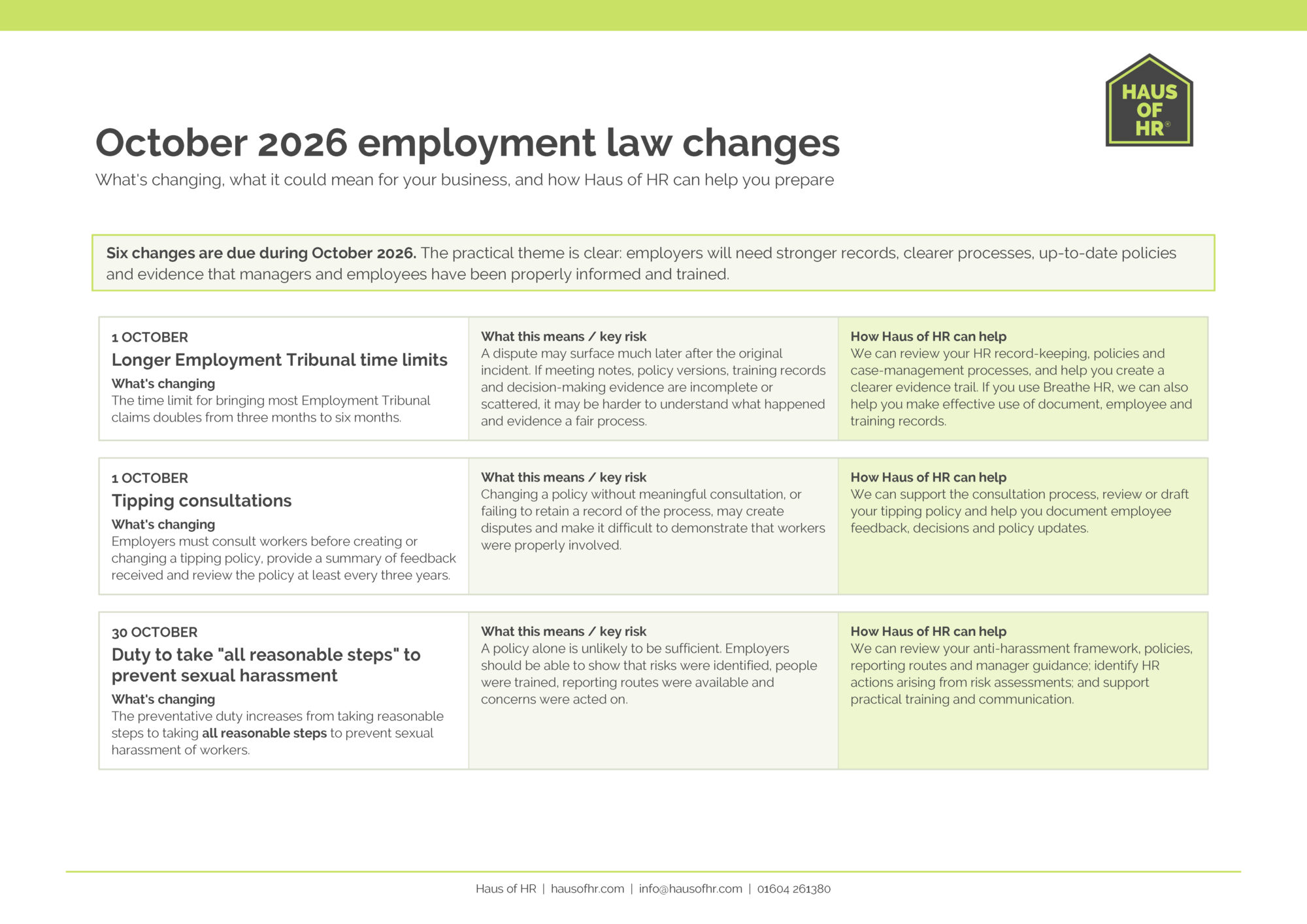
October 2026 is set to be an important month for UK employers, with several employment law changes coming into force that businesses need to have on their radar.
For SMEs in particular, the changes reinforce the importance of having not only the right HR policies in place, but also the processes, records and manager knowledge to demonstrate that they are being followed in practice.
So, what do employers need to know?
Employment Tribunal time limits increase
From 1 October 2026, the time limit for bringing most Employment Tribunal claims increases from three months to six months.
For employers, this makes good HR record-keeping even more important. Notes from meetings, correspondence, copies of relevant policies and evidence explaining how and why decisions were made may need to be relied upon many months after an employee relations issue occurred.
Businesses should therefore review how HR matters are documented and ensure managers understand the importance of keeping appropriate records.
Stronger sexual harassment prevention duties
From 30 October 2026, employers will be required to take “all reasonable steps” to prevent sexual harassment of workers.
This strengthens the existing preventative duty and means employers should be considering more than simply whether they have an anti-harassment policy.
Depending on the organisation, appropriate steps could include harassment risk assessments, regular employee and manager training, clear reporting routes and evidence that concerns are taken seriously and acted upon.
Protection from third-party harassment
Employer responsibilities will also extend further in relation to harassment by third parties, including customers, clients, suppliers and members of the public.
Businesses should consider where employees could be exposed to inappropriate behaviour – including customer-facing environments, client meetings, events, business travel and online interactions – and ensure employees know how to report concerns.
New trade union rights
A number of trade union reforms are also due to take effect from 30 October 2026.
These include a new requirement for employers to inform workers of their right to join a trade union, as well as strengthened rights for independent trade unions to request access to workplaces to communicate with workers.
Employers should be preparing to review their contracts, written statements, onboarding documentation and internal processes.
Don’t leave it until October
The key message for employers is to start preparing now.
Review your policies, check your record-keeping, assess harassment risks, make sure managers are appropriately trained and identify any changes needed to your onboarding documentation.
Haus of HR has created a free October 2026 Employment Law Changes Guide to help businesses understand the changes and the practical steps they should consider.
The guide is available to download from the Haus of HR website here.
Haus of HR provides practical, commercial HR support to SMEs and growing businesses across Northamptonshire, Milton Keynes, Buckinghamshire and beyond.
This article provides general information and should not be relied upon as legal advice.
Get in touch with Haus of HR for your free HR consultation.
Visit hausofhr.com
Call 01604 261380
Email info@hausofhr.com