



An inclusive approach to recruitment
By Sofia Syed and Dr Anita Devi
There is a quiet revolution happening in how some of the UK’s most forward-thinking employers are choosing to recruit. It does not always make the front page, but it is reshaping workplaces, families and entire communities. It starts, more often than not, with a conversation a bit like this one.
Imagine overhearing the following conversation:
MD: “We need to hire someone to take on routine tasks, it is taking too much of your time, Sam!”
Sam: “I agree … we will need to write a Person Specification and Job Description.”
MD: “Agreed”
Sam: “It would be great, if we could create a job opportunity for someone with a disability”
MD: “What do you mean?”
Sam: “Did you know? There were 5.6 million disabled people in employment in the UK in Q2 2024. This is an increase of 360,000 on the year. The disability employment rate was 53.1% in Q2 2024, compared to 81.6% for non-disabled people. The disability unemployment rate was 6.9% in Q2 2024, compared to 3.6% for non-disabled people. The disability economic inactivity rate, where the person self-reports that they are not in or looking for work, was 43.0% in Q2 2024, compared to 15.3% for non-disabled people.”
MD: “OK I hear you, but we can’t just advertise for a disabled person, that would be positive discrimination, wouldn’t it?”
Sam: “I’m not suggesting we advertise for someone with a disability, but we could make our recruitment process more inclusive”
MD: “Why? … and more the point how?”
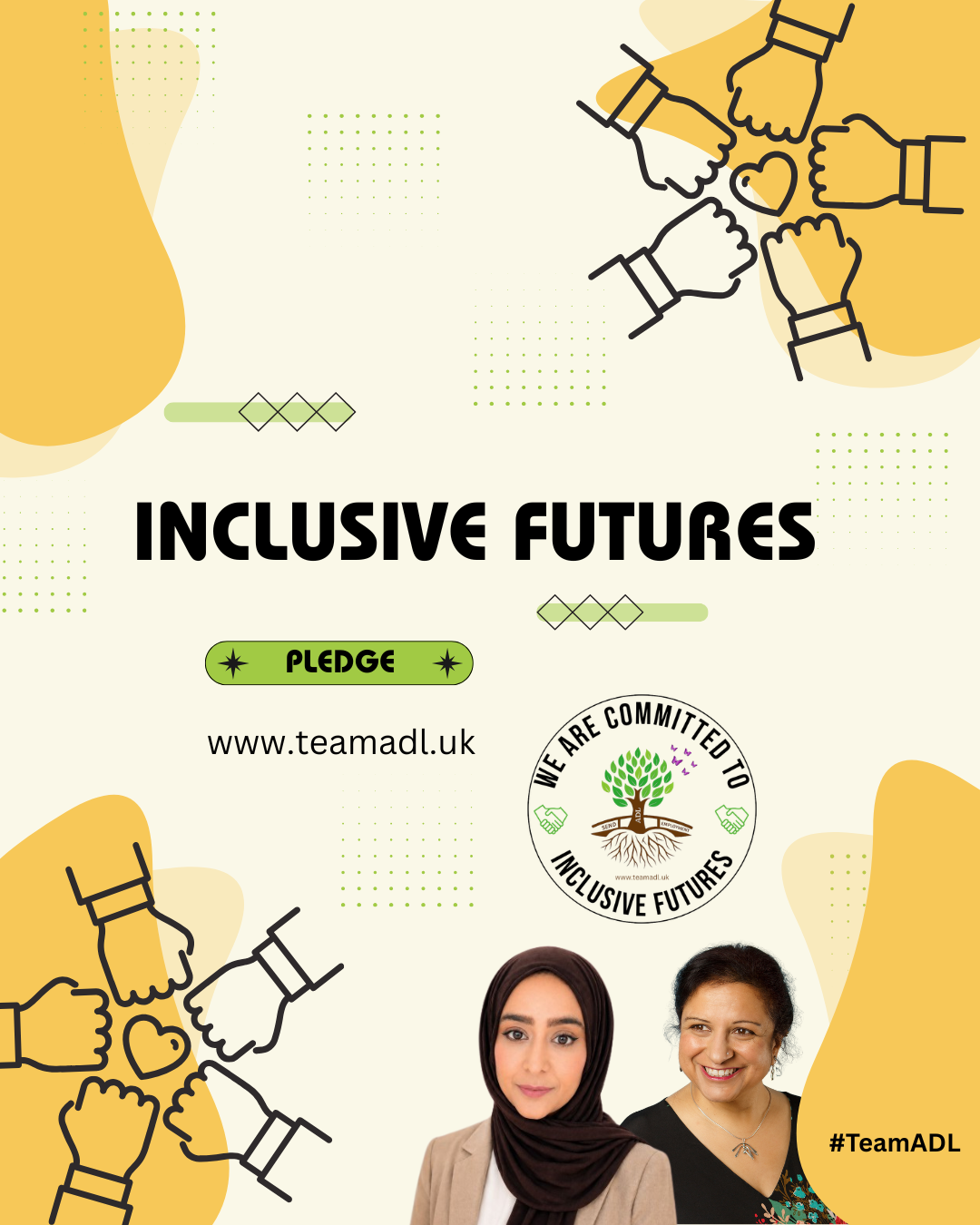
Sam: “Why? … my daughter has a disability, and I’ve been thinking a lot recently about what will happen when she is older and looking for work. I came across TeamADL and the work they do in this space. Back in 2018, they pioneered some innovative thinking working with Network Rail and others. We are not as big as Network Rail, but as a SME, we could sign their pledge It makes an approach to Inclusive Futures easier to navigate. I can email you a video link, if helpful.”
MD: “Sounds interesting, tell me more about what some companies are doing.”
Sam: “Watch this video from M & M Supplies in Milton Keynes. There is a strong loyalty factor. I think we should at least try and be more inclusive.”
MD: “I had no idea, thanks Sam … and yes let’s pursue this”
This conversation is not hypothetical. We hear versions of it every week from business owners, HR managers and operations leads who have started asking the right questions.
Our story
In 2018, TeamADL CEO and Founder, Dr Anita Devi, identified a real gap in the employment sector. Whilst a lot was being done in schools to support special educational needs and disability, this was not translating into the workplace.
Deeply moved by a local tragedy, Anita formed collaborations with local charities and multinational organisations, including Network Rail, Sainsbury’s and Argos. The work was recognised nationally, with TeamADL shortlisted as Finalists in the Disability Awards 2019 alongside the BBC and Virgin Media. Further projects were in the pipeline with DWP and the Foreign Office before the pandemic paused the work.
In 2025, we relaunched the agenda as Inclusive Futures, with Sofia Syed leading. Sofia previously worked in central government for the Department for Education and the Department for Work and Pensions. Our ambition is to build a scalable model for inclusive employment that can be shared across sectors and communities worldwide.
Why this matters for your business
Inclusive recruitment is often framed as a social good. That framing sells it short. Employers who have done this work report higher loyalty, stronger retention and a noticeable lift in team morale. There is also a hard commercial case. Around one in four working age adults in the UK now report a disability. In a tight labour market, companies that learn how to recruit and support this group early reach a talent pool their competitors are still walking past.
You do not need a large HR department to do this well. You need curiosity, a willingness to adjust, and one person inside the business who will champion it.
What good practice looks like
DPD Inspire
DPD UK launched its Inspire supported internship programme in 2018, partnering with DFN Project SEARCH and local colleges to bring young adults with learning disabilities or autism into the business. Interns rotate through structured placements supported by job coaches and a dedicated tutor. Publicly reported outcomes show more than twenty interns have moved into paid roles within the company. DPD also describe a wider culture shift inside host teams, with managers giving clearer instructions and customer service standards rising as a result. Source: DFN Project SEARCH ambassador statements and DPD published materials.
auticon UK
auticon is a technology consultancy where most of the workforce is autistic. The UK office opened in 2016. Autistic adults are employed as IT consultants in areas such as data engineering, cyber security and quality assurance, and matched to client projects by job coaches who handle the practical bridge between consultant and client. auticon’s published impact reporting indicates that 93% of clients say their consultants make valuable professional contributions, and 85% report a stronger understanding of neurodiversity inside their own teams. UK clients include PwC, KPMG and a number of FTSE 100 organisations. Source: auticon UK impact materials and Social Enterprise UK case study. These figures are self-reported and have not been independently audited.
Where to start
- Review job adverts and person specifications. Strip out anything that is not genuinely essential.
- Offer adjustments at every stage of recruitment in writing on the application itself. Most cost nothing.
- Sign the TeamADL Inclusive Futures pledge. It gives you a clear framework to work from.
- Identify one internal champion who will hold the work and keep momentum.
- Host one supported internship before you scale. A single placement teaches you more than any policy document.
For employers who want to take the next step
You do not need to have all the answers before you begin. You need the willingness to review, learn and act.
We support employers to build inclusive recruitment, mentoring and workplace practices. The support is hands on, tailored to the size of the business, and free from jargon.
Employers information is available on the TeamADL website at Our Collective Responsibility. The companies above did not begin with a perfect plan. They began with a willingness to try. That is the only real prerequisite.
Sources
Labour market statistics: DWP, The Employment of Disabled People 2024. DPD Inspire: DFN Project SEARCH ambassador profiles. auticon: Social Enterprise UK case study and auticon UK impact reporting.